Long Beach, Signal Hill and nearby cities
Plumber in Long Beach, CA
Leak, clog, no hot water or a sewer backup? Call or send a request to be connected with an independent Long Beach plumbing contractor.
Plumbing problems in Long Beach rarely pick a convenient moment. The water heater in a Belmont Heights bungalow starts leaking from the bottom of the tank. A sewer lateral under an older California Heights house backs up into the shower the morning guests arrive. A slow drip inside a wall in a post-war Los Altos house finally shows up as a stain on the ceiling. Some of these are emergencies and some can wait a day, but each one raises the same two questions: who should I call, and what will it cost?
Long Beach Plumber Help keeps the first step simple. Call (562) 850-1215 or send a request, and it goes to an independent plumbing contractor who serves Long Beach and the cities around it. The plumber contacts you, looks at the problem and gives you a price before any work begins. You decide whether to go ahead, and there is no charge for the referral.
Requests are welcome from every part of the city, from Naples and Belmont Shore to Bixby Knolls, Wrigley and North Long Beach, and from Signal Hill, Lakewood, Carson, Bellflower, Seal Beach and Los Alamitos. Single-family homes, duplexes, condos and apartment buildings all start the same way: one call or one form.
Long Beach also does a few things differently from its neighbors. The city runs its own utility for water, sewer and natural gas, so gas questions inside Long Beach go to Long Beach Utilities rather than SoCalGas. Most of the city's tap water is a fairly soft groundwater blend. And the city spells out who maintains each part of a sewer lateral. The sections below cover those details, along with typical costs, permits, licenses and the questions worth asking before you agree to a price.
Long Beach Plumber Help is an independent referral service, not a plumbing company. It does not employ plumbers, own trucks or sell water heaters. When you call or send a request, it is passed to an independent, third-party plumbing contractor who serves Long Beach. That contractor contacts you, looks at the problem, sets the price, schedules the work, handles any permit and backs the job with their own warranty and terms.
Using this site costs you nothing. You pay only the plumber, and only if you approve the work they quote. Callbacks and on-site availability vary.
More about us
Most Long Beach plumbing calls come down to five kinds of work: urgent problems that cannot wait, clogged drains, water heaters, the sewer lateral that runs from the house toward the street, and leaks you can see or only suspect. Each service page below covers the warning signs, how the work is usually done in plain terms, typical costs labeled by source, the California and Long Beach rules that apply, and the questions to ask before you agree to a price.
Requests are welcome from across Long Beach and from the cities around it. Signal Hill, Lakewood, Carson, Bellflower, Seal Beach and Los Alamitos each have their own page covering the water, sewer, gas and permit details that set them apart. Requests from Cerritos, Paramount, Hawaiian Gardens and Rossmoor are handled the same way. Coverage is always confirmed by address when the plumber follows up.
See all service areas
Your request goes to an independent plumbing contractor who works in Long Beach and nearby cities.
Ask for the price, or at least the service call fee and hourly rate, before anyone starts.
California licenses plumbing contractors through the CSLB. Ask for the license number and look it up.
Using this site is free. You pay the plumber only for work you approve.
The plumber you are connected with sets their own prices, so every figure here is a guide, not a quote. We did not find a cost guide specific to Long Beach. The closest local figures are for Los Angeles, and the rest are national. Read them as several sources side by side, not one true Long Beach price.
Los Angeles figures (Angi; the pages do not date their data; read November 2026):
National figures: HomeAdvisor's clogged drain guide (labeled 2025) puts most drain clearing at $147 to $345, and its slab leak guide (labeled 2025) puts leak detection at about $280 typical. HomeGuide's emergency plumber guide (undated, not tied to a city) puts after-hours weekday rates at $120 to $300 an hour. HomeAdvisor and Angi share one cost database, so count them as one source.
One Long Beach number you can count on: city plumbing permits start at a $100 minimum fee per permit on the schedule that took effect October 1, 2025 (City of Long Beach fee schedule). Your plumber's quote should say whether the permit is included.
What moves the price: when the work happens, how hard the pipe is to reach (inside a wall, under a slab, no cleanout), the pipe material and the distance to the main, trenchless lining versus an open trench, tank versus tankless and gas versus electric, earthquake strapping and connector upgrades, and permit fees. Ask for the price, or the service call fee and hourly rate, in writing before work starts.
Long Beach runs water, sewer and natural gas through one city department. Voters approved merging the city's water, sewer and natural gas services into a single Public Utilities Department at the November 8, 2022 election, according to the City of Long Beach. The department now goes by Long Beach Utilities, with headquarters on East Wardlow Road.
The water side alone is large. Before the merger, the water department said it served "nearly 460,000 people through over 900 miles of pipelines" (Long Beach Water). The sewer side operates and maintains more than 700 miles of sanitary sewer carrying about 40 million gallons a day (Long Beach Utilities sewer).
A few edge areas of the city get water from someone else. Cal Water's Dominguez system serves "portions of Long Beach" along with most of Carson (Cal Water 2024 report), and Golden State Water's Central Basin East system also covers portions of Long Beach (Golden State Water). Most Long Beach homes are on Long Beach Utilities water. Your bill shows which provider serves you.
Why it matters for plumbing: a break in a water main in the street is the utility's job, not a plumber's, so call the provider on your bill. A leak on your side of the meter is plumbing work. California's C-36 plumbing license covers water and gas piping "from the owner's side of the meter" to the building, per the CSLB.
You will read plenty of plumbing advice that says Southern California water is hard. For most of Long Beach, the utility's own numbers say otherwise.
In 2025, 71 percent of the city's drinking water came from local groundwater and the rest was imported from the Metropolitan Water District, according to Long Beach Utilities' 2025 water quality report. Groundwater and imported water are blended at the Long Beach Groundwater Treatment Plant before going out to "the majority of Long Beach's service area." Long Beach has been tied into imported water for a long time: the utility says the city joined the Metropolitan Water District in 1931 as one of its 13 original members (water sources).
Hardness depends on which zone your home is in:
The report includes a map of the two zones but no street list, and we could not confirm which neighborhoods are in the imported water zone. Ask Long Beach Utilities which zone you are in before you buy a water softener. If your home is in the blended zone, a softener may not be worth the cost. If it is on straight imported water and your water heater rumbles or your faucet aerators clog with white grit, mention it to the plumber.
Lead: the same report says 63 home taps were sampled, the 90th percentile was below the reporting limit and none were over the 15 parts per billion action level. It also says the utility has no lead or galvanized service lines in its distribution system that require replacement, based on an inventory completed in October 2024. That covers service lines, not the pipes, solder and fixtures inside your home, which a plumber can look at.
This is the detail most out-of-town advice gets wrong. Long Beach runs its own natural gas utility, and has since May 26, 1924, when service began to about 4,600 customers (City of Long Beach gas history). Today it serves Long Beach and Signal Hill plus parts of Los Alamitos, Bellflower, Compton and unincorporated LA County, about 500,000 people over more than 1,900 miles of pipeline (Long Beach Utilities gas).
So inside Long Beach and Signal Hill, questions about a gas meter, a gas leak or turning gas back on go to Long Beach Utilities Gas, not SoCalGas. In Lakewood, Bellflower and Seal Beach, the cities list SoCalGas as the gas utility, though Long Beach Utilities also serves parts of Bellflower and Los Alamitos.
Who owns which gas pipe. Long Beach Utilities owns the line from the street main to its meter. You own the "Customer Houseline" from the meter to the building and out to any outdoor gas appliances, such as a pool heater, spa or barbecue, and the utility says it does not maintain that pipe (customer-owned gas lines). Buried sections can corrode and leak over time. The utility advises owners to inspect them periodically and repair leaks and corrosion, and notes that licensed plumbers and leak detection companies can help. Gas piping work on your side of the meter falls under the C-36 plumbing license, and in Long Beach it generally needs a plumbing permit (see the permit section below).
Wastewater leaves a Long Beach home through a pipe called the sewer lateral, then flows into the city's sewer mains and on to a regional treatment plant. Long Beach Utilities spells out who is responsible for each part of the lateral (Long Beach Utilities sewer):
The utility also says owners can be billed if what they put down the drain, such as fats, oils and grease, clogs or damages the city main.
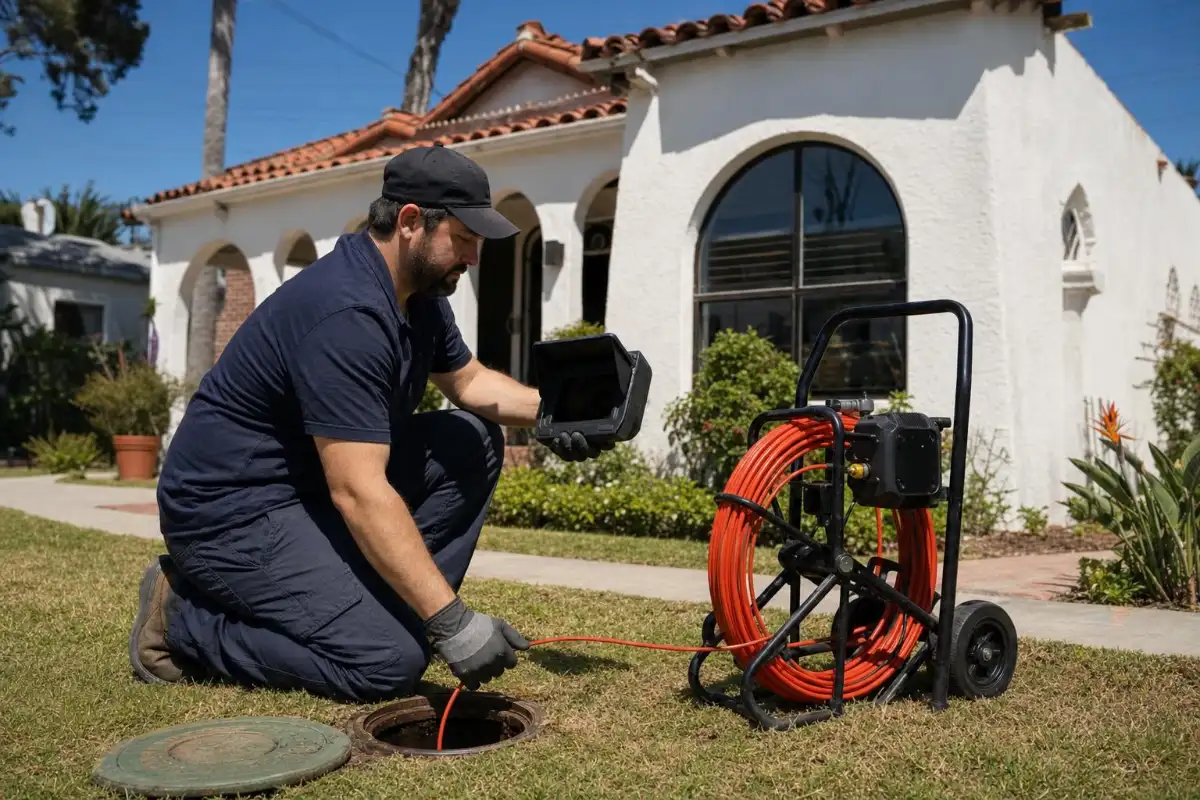
Before anyone snakes a backup, rule out a cross bore. Long Beach Utilities says the first step with a sewer backup is an inspection "to ensure there is no presence of a cross bore in the sewer lateral" (sewer backups). A cross bore is a gas line that was bored through a sewer lateral. A root-cutting snake run blind can cut that gas line and cause a leak. Warning signs include bubbles in standing water or a toilet, hissing at the cleanout and a gas smell. The owner inspects, clears and drains the lateral, and the utility investigates only after the owner's video shows a problem on City property. It "strongly recommends" a 4-inch cleanout at ground level on the downstream side of the house. Ask any plumber how they check for a cross bore before cutting.
Treatment. Long Beach lies in Los Angeles County Sanitation Districts 1, 2, 3, 8 and 19, and the Sanitation Districts own the Long Beach Water Reclamation Plant inside the city (LA County Sanitation Districts). The Sanitation Districts handle regional trunk sewers and treatment, and say local sewers and laterals are the local jurisdiction's job.
Long Beach's housing is old, even by Southern California standards. The city's 2021 to 2029 Housing Element (draft, February 2022) counts occupied homes by year built, using 2015 to 2019 American Community Survey data:
By our math from that table, about 33 percent of occupied homes were built before 1950, about 56 percent before 1960 and about 83 percent before 1980. The document itself says "more than 80 percent of housing units in Long Beach are more than 50 years old" and that a large portion of the housing stock is likely in need of rehabilitation and repair. Census Reporter, summarizing the 2024 American Community Survey, counts 450,917 residents in 181,216 housing units, with a median owner home value of $849,500.
What that means for pipes, as general plumbing knowledge rather than a Long Beach count: homes from before the 1960s were often built with galvanized steel supply pipe and cast iron drains, both of which corrode and narrow from the inside over the decades, and older clay sewer laterals have joints that roots can find. We could not find a source saying how common each material is in Long Beach, so ask the plumber what your house actually has. Signs of tired supply pipe include low pressure at several fixtures, rusty water, repeated pinhole leaks and fittings that weep. When leaks keep showing up in the same kind of pipe, ask whether repiping a section or the whole house makes more sense than another spot repair.
Plumbing advice written for cold places does not fit here. NOAA's 1991 to 2020 normals for Long Beach Daugherty Field, the airport station, show coldest average lows of 46.6 degrees in December and 46.9 in January, average highs of 83.2 degrees in August and 82.4 in September, and an average of 0.1 nights a year at or below freezing in January and none in any other month. By our reading, that is about one frost night a decade. Rain falls mostly in winter: about 2.9 inches in January, 3.0 in February and 2.2 in December, and under a tenth of an inch a month from June through September, or about 12 inches a year by our sum.
So when a pipe bursts in Long Beach, cold is almost never the reason. Age, corrosion, water pressure, a failed fitting or an earthquake are the usual suspects. The winter rain months are when a cracked or root-filled sewer lateral is most likely to show itself, and the long dry season is when tree roots go looking for moisture in old sewer joints.
Long Beach gave its name to one of California's defining earthquakes. On March 10, 1933, a magnitude 6.4 earthquake killed 120 people, 52 of them in Long Beach, and caused about "$50 million in 1933 dollars" in damage, according to the California Geological Survey. It led to the Field Act, the state law that governs how public schools are built. Strapping your water heater is the homeowner's version of the same lesson.
California law requires it. Health and Safety Code 19211 (unofficial reprint) says water heaters "shall be braced, anchored, or strapped to resist falling or horizontal displacement due to earthquake motion," at least to the California Plumbing Code. It covers heaters of not more than 120 gallons, and home sellers must certify compliance to the buyer in writing.
The Division of the State Architect's strapping guidelines explain what that looks like:
If your heater is not strapped, a plumber can add straps on a service visit, and any new heater should be strapped as part of the install.
Plumbing permits in Long Beach come from the city's Community Development Department, at the Permit Center on the 3rd floor of 411 West Ocean Blvd. (Long Beach Community Development). Its Building and Safety Bureau runs an online plumbing permit application, and the counter is open 8:00 AM to 4:00 PM Monday through Friday, opening at 9:00 AM on Wednesdays and closing from noon to 1 PM.
Water heaters need a permit. The city's permit FAQ answers plainly: "Yes, you must first obtain a plumbing permit before replacing your residential water heater." A plumbing permit "must be obtained by either the owner or a licensed plumbing contractor," and owners may pull permits for a house they live in or will live in. Gas piping needs a plumbing permit, except piping under 6 feet between an existing outlet and an appliance in the same room. Replacing a residential garbage disposal does not need one.
What usually does not need a permit. The city's Do I Need a Permit page lists fixing leaks or basic defects such as valve stems and cartridges with no new materials, replacing exposed traps, ball cocks or faucets with approved types, repairing a water heater thermocouple or igniter (not the vent), and repairing an electric water heater if the rough plumbing is not changed. Replacing a sink, toilet or dishwasher does need a permit, and historic districts and coastal zones may add requirements.
Fees. On the schedule effective October 1, 2025, the plumbing permit minimum is $100 per permit, each plumbing fixture is $14, replacing a water service is $16 and installing or altering an on-lot sewer is $14. Ask the plumber whether your job needs a permit and who will pull it, and check that the final inspection passed before you make the last payment.
California licenses plumbing contractors through the Contractors State License Board. The C-36 Plumbing Contractor class covers systems that provide "a supply of safe water, ample in volume and of suitable temperature" and "the proper disposal of fluid waste," including gas and liquid piping and venting, gas appliances and flues, water and gas piping from the owner's side of the meter to the structure, water heating equipment, and maintenance and replacement work including backflow preventers.
The $1,000 rule. Since January 1, 2025, someone without a license may take on a job only if it totals under $1,000, raised from $500 by AB 2622, according to the CSLB's announcement. The exemption applies only when the person hires no workers and the work needs no building permit, and unlicensed ads must say the person is not licensed. Because Long Beach requires a permit to replace a water heater, that job falls outside the exemption at any price.
Down payments. The CSLB's consumer pamphlet, What You Should Know Before You Hire a Contractor, says to "Pay no more than 10% down or $1,000, whichever is less," with an exception for contractors who have a blanket performance and payment bond on file. The same pamphlet says to verify the license with the CSLB before you sign. Ask for the license number and look it up.
Long Beach has been at Level 1 of its Water Shortage Contingency Plan since August 1, 2023, according to Long Beach Utilities. Landscape watering is limited to Tuesdays, Thursdays and Saturdays, before 9 a.m. or after 4 p.m., for 10 minutes per station, with no watering during rain or for 48 hours after. Hoses need a shut-off nozzle, and runoff and hosing down hardscape are not allowed.
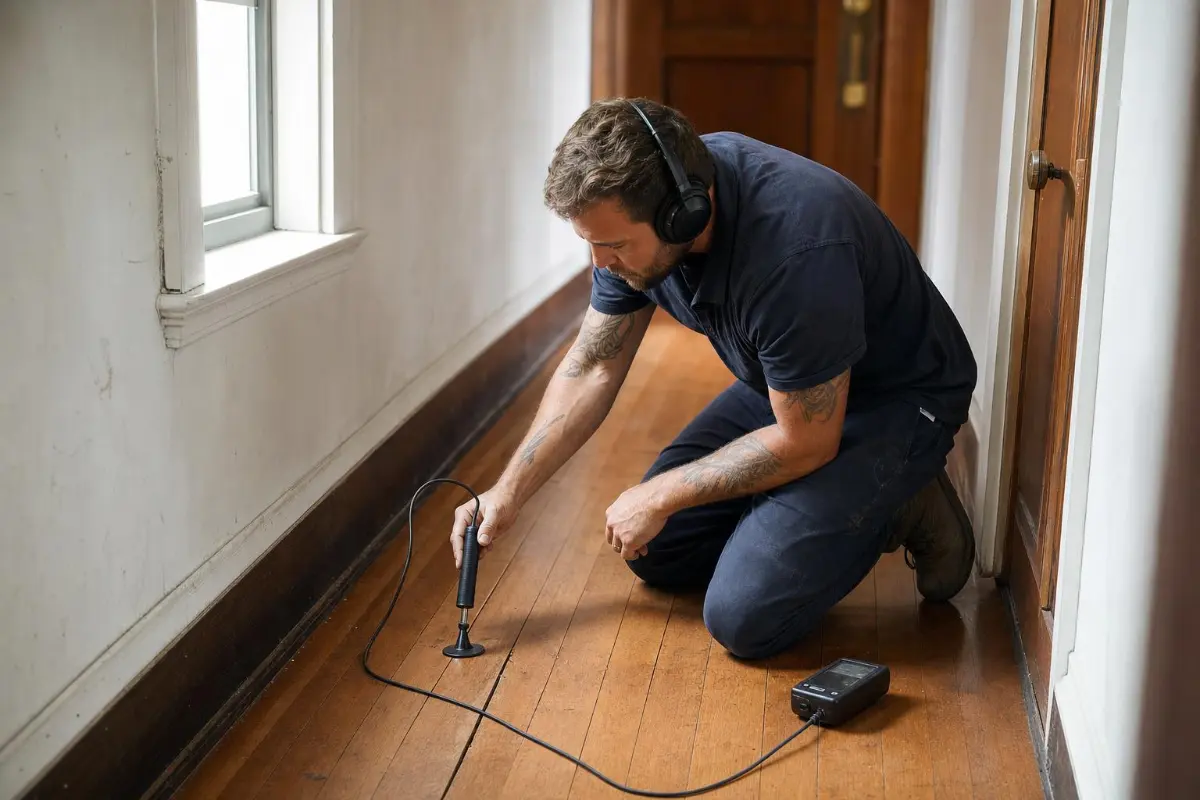
The same rules prohibit wasting water through "plumbing or pipeline breaks, leaks, or malfunctions." We did not find a stated deadline for fixing a leak, but a running toilet, a dripping irrigation valve or a wet patch in the yard is worth having looked at. Leak detection can find a hidden leak without opening every wall.
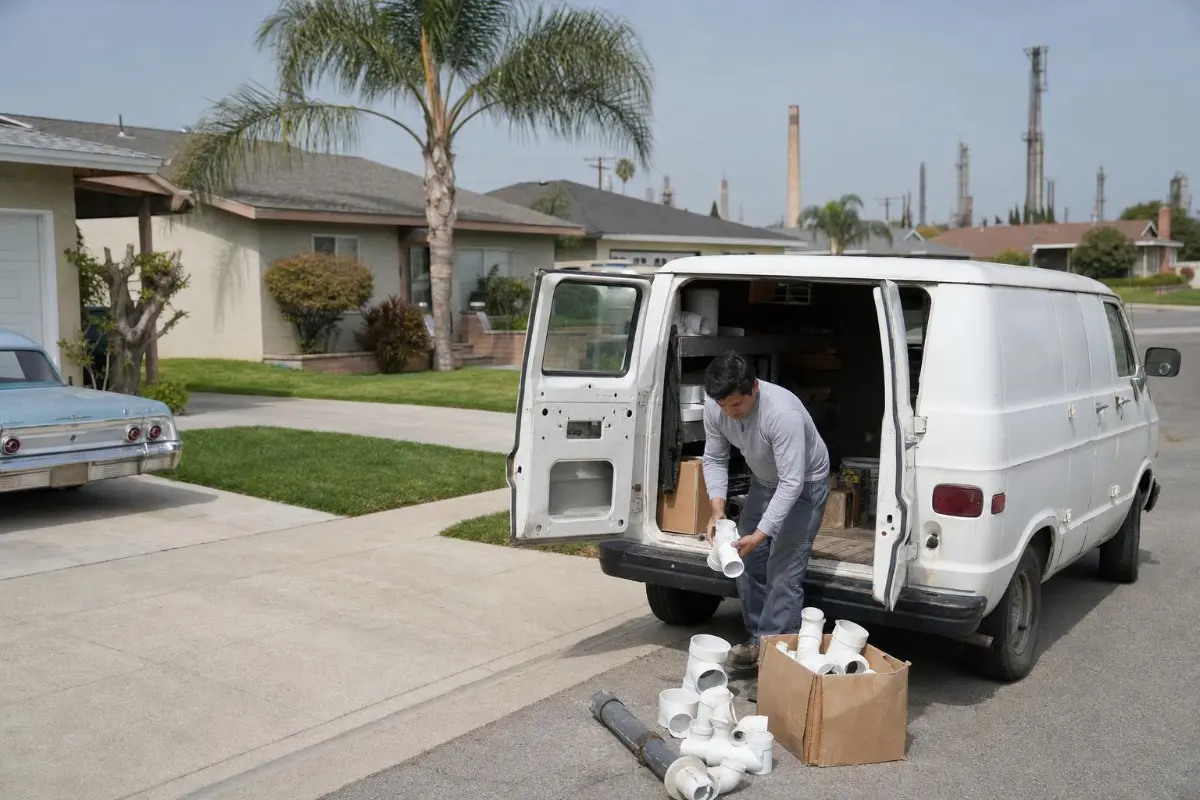
Long Beach is a city of renters. The city's Housing Element says 61 percent of households rent, and plenty of Long Beach buildings put several units on one set of drains, water heaters and laterals.
That shapes how plumbing problems get solved. In a multi-unit building, one kitchen stack or sewer lateral can serve several units, so a clog or leak in one unit may start somewhere else. If you rent, tell your landlord or property manager first, since they usually arrange the repair and choose the plumber; check your lease. If you own or manage a duplex, fourplex or larger building, requests are welcome for common lines, water heaters serving several units, laterals and leaks between floors. Say how many units are affected when you call or send a request.
Whether you use this site or call around yourself, these questions sort plumbers quickly.
Keep the down payment to no more than 10 percent or $1,000, whichever is less, as the CSLB advises.
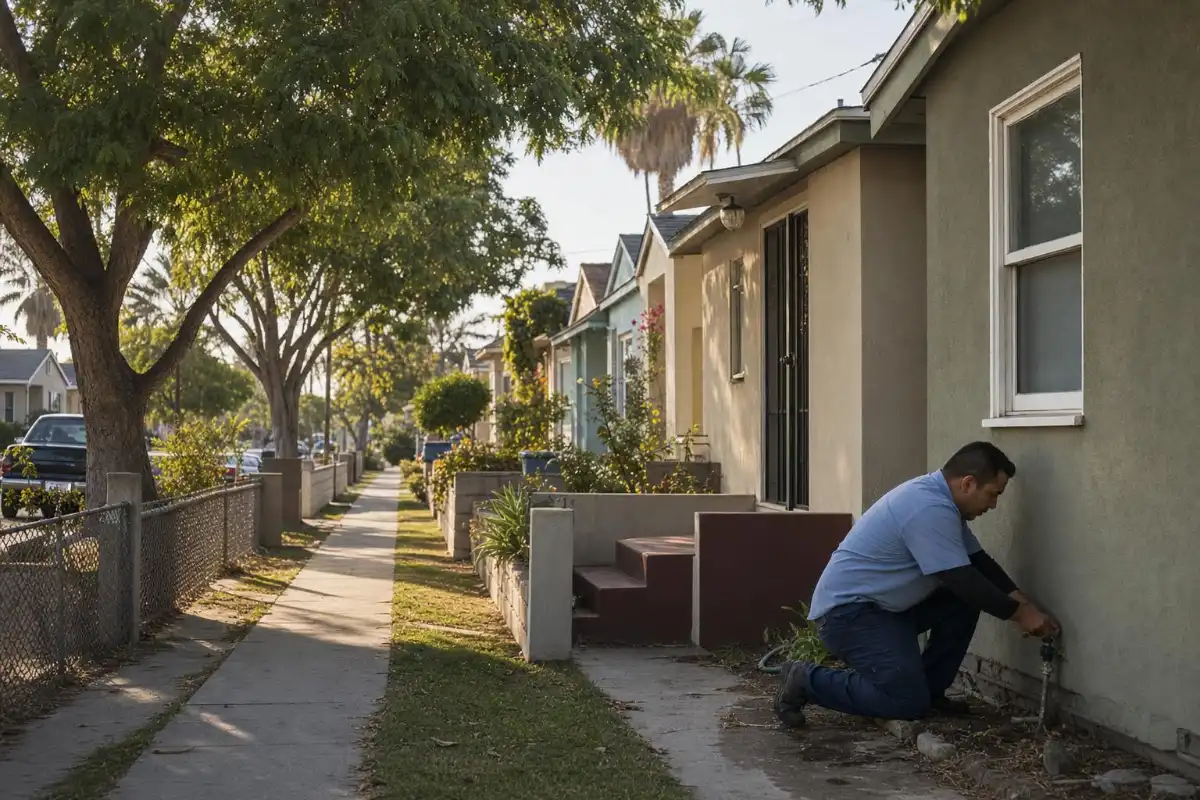
Long Beach Plumber Help cannot help with a gas leak, and neither should any plumber you call first. In Long Beach and Signal Hill, Long Beach Utilities gives these steps:
After an earthquake, the utility says to shut off gas at the meter only if you smell or hear gas: "Use a crescent wrench and give it a quarter turn in either direction so that it runs crosswise on the pipe." Then call Long Beach Utilities to restore service.
In nearby cities on SoCalGas, such as Lakewood and Seal Beach, SoCalGas says to evacuate, call SoCalGas from a safe place, avoid anything that could make a flame or spark and not try to fix the leak, and to call 911 if life or property is in danger. Once the utility or the fire department has made the house safe, a licensed plumber can repair gas piping on your side of the meter, which needs a permit.
Sewer lateral, water line and gas houseline replacements often mean digging in the yard or the parkway. Long Beach Utilities says to call DigAlert at 811 at least two full working days before you dig (customer-owned gas lines). On a sewer, water or gas line job, ask the plumber who is calling 811 and when the marks will be in place.
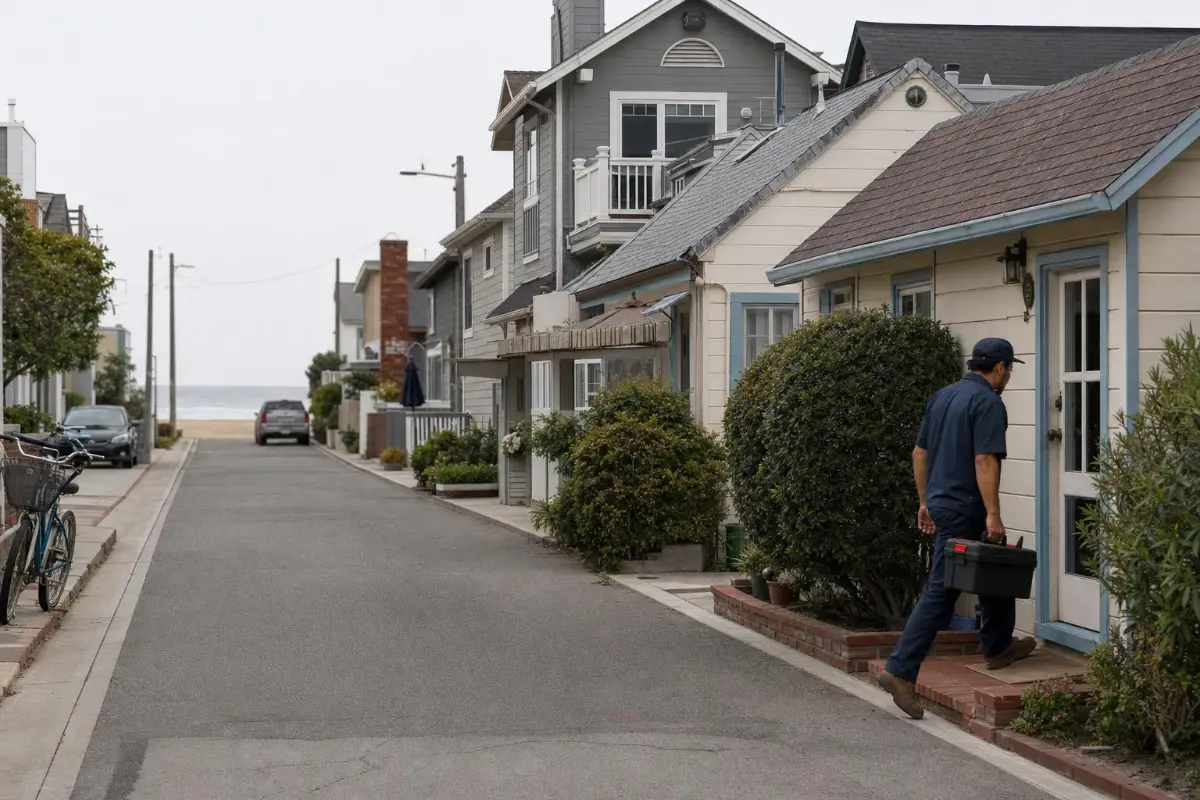
1. Call (562) 850-1215 or send the form. Describe the problem, how urgent it is and where you are. 2. A plumber follows up. An independent plumbing contractor who serves Long Beach contacts you to set a time. Callbacks and on-site availability vary. 3. Diagnosis. The plumber looks at the problem and explains the cause. Ask up front about any service call or diagnostic fee. 4. Written price. You get a price for the repair before work starts. For bigger jobs, ask what is included and what could change it. 5. Permit and repair. If the work needs a permit, the plumber pulls it and does the work. 6. Inspection and final payment. Where a permit was pulled, check that the final inspection passed before paying in full.
You decide at every step. Nothing is done without your approval, and there is no charge for the referral.
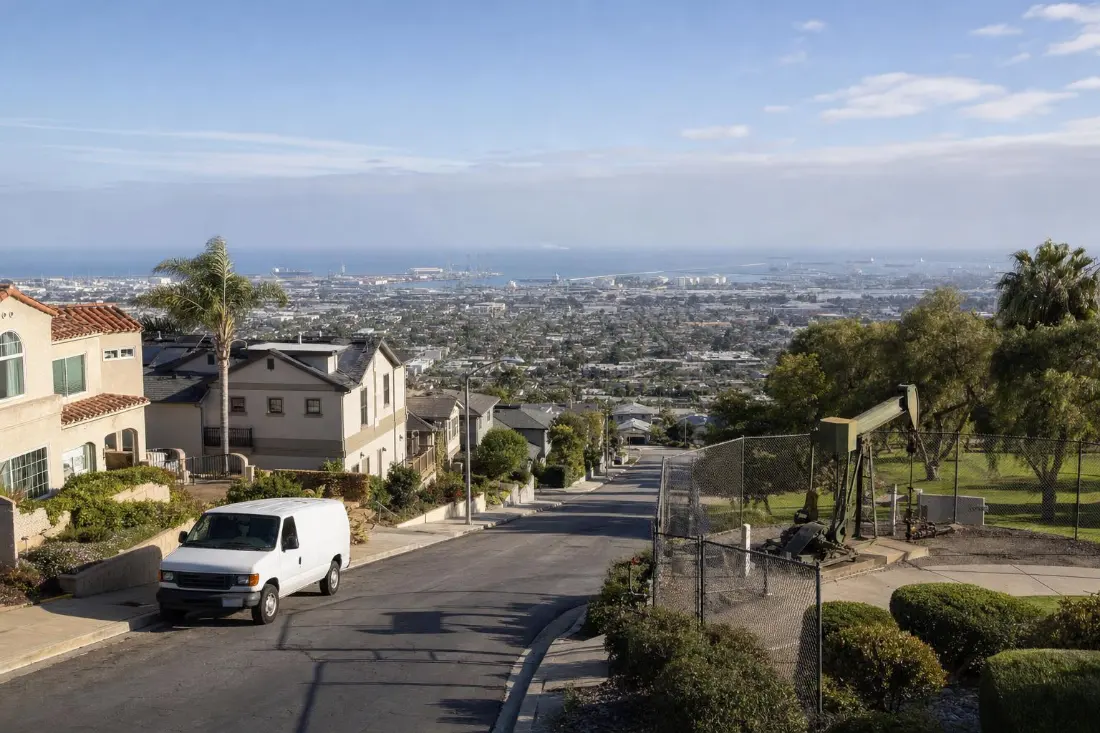
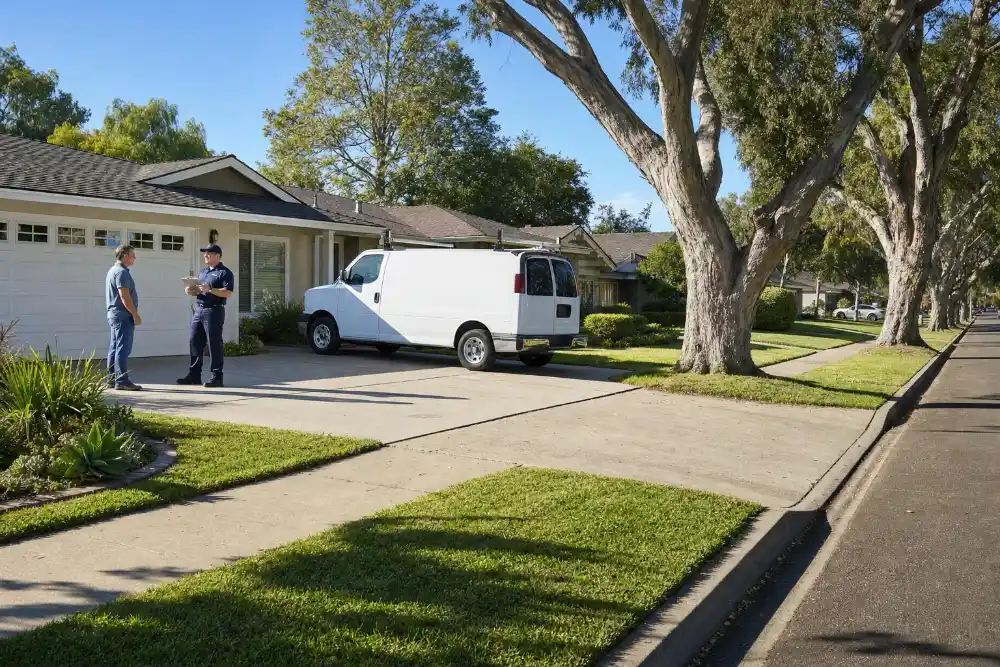
Requests are welcome from the neighborhoods along the water on the city's east side.
Homes this old often still have original drain and supply lines somewhere in the house, so ask the plumber what they find. Also nearby: Alamitos Beach, laid out as a town site in 1886 and annexed in 1905 per the context statement, and the Retro Row stretch.
Long Beach keeps a list of 18 historic districts, and many of them are full of homes more than a century old (City of Long Beach historic districts):
The city says historic districts may add permit requirements, so plumbing work that touches the outside of a historic home, such as a new vent or a relocated water heater, is worth asking about before it starts (Do I Need a Permit).
Requests are welcome from the neighborhoods north and west of downtown.
In homes approaching a century old, a sewer lateral that has never been replaced is common enough that a camera inspection is often the first step on a recurring backup.
Requests are welcome from every other part of the city too.
Mention your neighborhood, cross streets or ZIP code when you call or send a request.
The same referral process covers homes outside city limits, and the details change at each border:
Population figures from the 2020 Census are listed in the LA Almanac. Permit rules differ by city, so the plumber confirms which office applies when they follow up. Coverage is confirmed by address.
Long Beach Plumber Help does not handle insurance claims and cannot tell you what your policy covers. Sewer backups, slab leaks and slow leaks are each treated differently by different policies, and a renter's policy and the building owner's policy cover different things. Read your policy and call your agent or insurer before you assume either way. Take dated photos of any damage, keep receipts and save the plumber's written description of the cause. If you are selling a home, remember that California requires sellers to certify in writing that the water heater is strapped.
Long Beach Plumber Help does not do the plumber work itself. When you call or send the form, we pass your request to an independent local contractor who covers your part of Los Angeles County. That contractor contacts you, gives you the estimate and does the work.
See what happens after you callNo. Long Beach Plumber Help is an independent referral service, not a plumbing company. Your request goes to an independent plumbing contractor who serves Long Beach. That plumber looks at the problem, sets the price, does the work and provides any warranty under their own terms.
No. The referral is free. You pay only the plumber, and only for work you approve after hearing the price.
We did not find a Long Beach cost guide. Angi's Los Angeles page (undated) puts a typical plumber visit at $193 to $600, with a service call of $100 to $250 and after-hours work at 1.5 to 2 times the standard rate. Long Beach plumbing permits start at a $100 minimum. The plumber sets the price.
It depends on the plumber's schedule. Callbacks and on-site availability vary. Say clearly whether water is running, the sewer is backing up or you have no hot water, so the plumber knows how urgent it is.
Long Beach Utilities says the section from the building to the property line is the owner's, the section from the property line to the center of the street or alley is shared between the owner and the City, and the owner handles routine maintenance of both.
Leave the area, get everyone out and call 911 or the gas utility from a safe spot. In Long Beach and Signal Hill that is Long Beach Utilities, not SoCalGas. Do not light anything or use a phone near the odor, and do not call this site or a plumber first.
Tell us what is going on with your plumbing and get connected with an independent Long Beach plumbing contractor.
Free — no obligations